AI
March 8, 2026
Autonomous Coding Agents: Inside the 48-Hour AI Sprint
Introduction: When the Agent Keeps Working After You Log Off
For most of software history, "the build" stopped when the engineer stopped.
That assumption quietly broke in 2026.
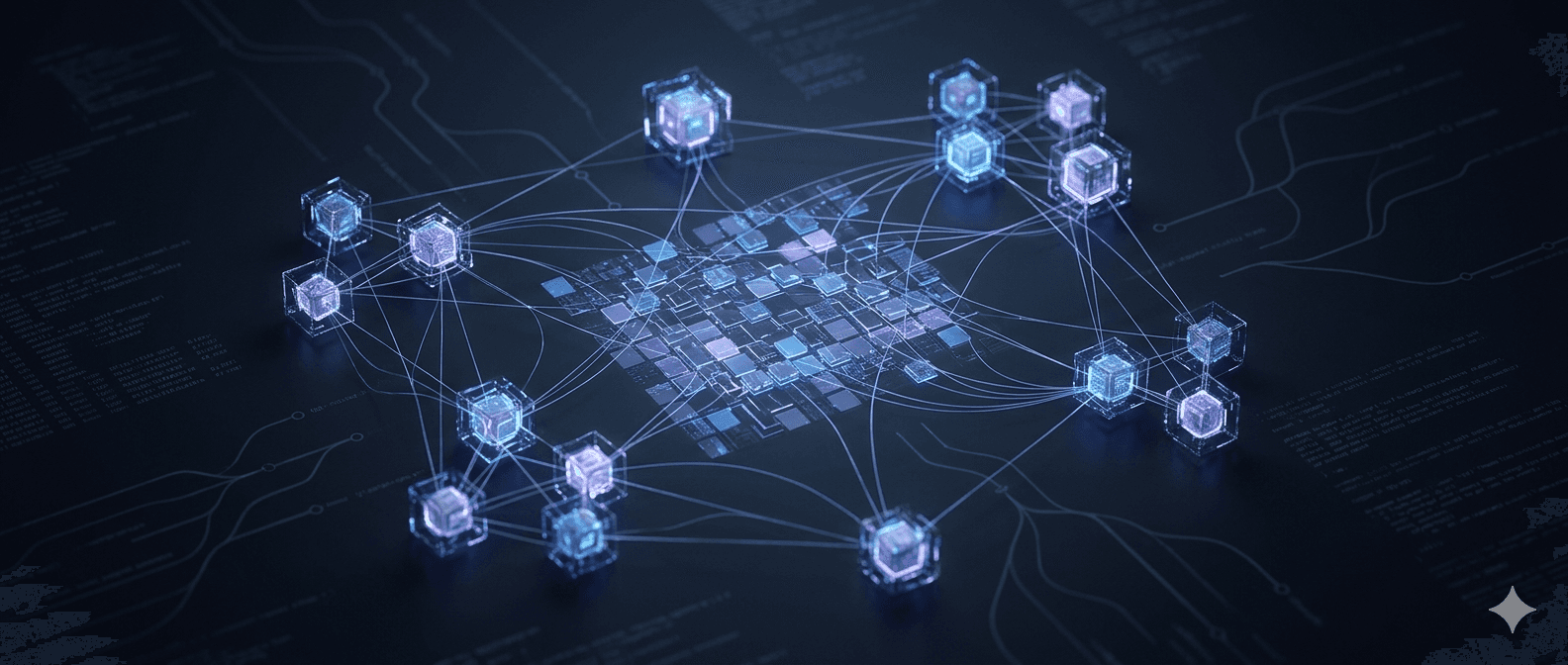
This year, coding agents from Cursor, Anthropic, OpenAI, and Google started operating for 24, 36, even 52 hours at a stretch without human hands on the keyboard. They open branches, plan, run tests, ask other agents to review their work, and push pull requests back to humans when they get stuck.
Teams using this well describe it as a "second shift" that never sleeps. Teams using it badly describe waking up on Monday to 151,000 lines of code nobody asked for.
Both things can be true of the same tool.
This article is a grounded look at what autonomous coding agents actually do in 2026, what they are honestly bad at, the real experiences engineering teams are reporting, and how to use them without quietly eroding the quality of your system.
What Changed in 2026 (and Why It Matters)
A few shifts stacked on top of each other and created a new category of work.
1) Planning-first agents became the default
Modern agents no longer just stream code. They produce an execution plan, ask humans to approve it, then break it into sub-tasks delegated to other agents. If the plan is wrong, the run is wrong. If the plan is good, the run is usually surprisingly coherent.
2) Multi-agent verification is now standard
One agent writes. A second agent reviews. A third runs tests and reports. Humans step in at checkpoints instead of per-file. This pattern is what unlocks hour-long and day-long runs without total chaos.
3) Tool use is no longer a demo
Agents now reliably use terminals, browsers, cloud CLIs, CI systems, GitHub, and internal APIs. The limiting factor is often your own infrastructure, not the model.
4) Benchmarks converged, but roles diverged
Top models are now within one or two points of each other on SWE-bench Verified, but they have clearly different personalities on agentic tasks: some are better at long-horizon planning, some at aggressive tool use, some at careful review. Teams increasingly run two or three models in parallel and route by task type.
The short version: the bottleneck is no longer "can the model write code." It is whether your team can safely let something write code for a day straight.
What Autonomous Agents Are Genuinely Good At
Before the warnings, credit where it is due. These workloads map cleanly to long-running agents and produce real value.
Greenfield scaffolding
Building a new service, a new UI module, or a new internal tool from a clear spec. Agents can scaffold the repo, set up CI, add auth, write base tests, and leave you with a working skeleton in hours.
Large mechanical migrations
- moving a repo from one test framework to another,
- renaming APIs across hundreds of files,
- upgrading SDK versions,
- codemod-style refactors with clear before/after rules.
These are tasks humans hate and agents handle unusually well.
Coverage and cleanup work
- writing missing unit tests,
- documenting undocumented modules,
- standardising error handling,
- removing dead code paths found by static analysis.
This is work that usually never gets done. Agents will actually do it.
Exploratory spikes
Give an agent a hard question ("can we swap this queue for Kafka?"), let it build a throwaway prototype, and then read its report. You are not shipping its code, you are harvesting its findings.
In all four cases the common factor is the same: the task has a clear definition of done, and the blast radius is contained.
The Core Risk: Volume Without Understanding
The failure mode of vibe coding was "code you can run but cannot defend."
The failure mode of autonomous agents is worse: code you did not write, cannot fully read in a reasonable time, and is already in your main branch.
A 48-hour agent run can easily produce:
- thousands of lines across dozens of files,
- new dependencies,
- schema changes,
- new environment variables,
- new infra,
- and subtly reshaped domain models.
No human can review that with normal tooling. And if review is shallow, ownership is fiction.
This leads to a pattern many teams now recognise:
Shipping speed is obviously up. Confidence in the system is quietly down.
Real Experiences Engineering Teams Are Reporting
These are patterns repeatedly described by engineering leads, indie developers, and platform teams working with long-running agents in production.
Experience #1: "The first weekend it was a miracle, the second it was a mess"
A small SaaS team let an agent run over two weekends building the same module in two different ways. Weekend one: clean code, sensible structure, glowing review. Weekend two: same prompt, same repo, wildly different architecture, duplicated utilities, silent behaviour changes.
The lesson most teams eventually learn: agents are not deterministic engineers. Without strong house rules and templates, two runs can produce two different codebases.
Experience #2: "We shipped 30% faster, then spent that time hunting ghosts"
A larger enterprise reported a real 30% improvement in throughput for routine features. They also reported a new class of bugs: behaviour that "seems right" but diverges from spec in edge cases nobody noticed in review.
The fix was not to slow the agent down. It was to move quality gates upstream: stricter specs, stronger property-based tests, and mandatory failure-mode documentation before merge.
Experience #3: "The agent solved the problem, but the problem was wrong"
This story shows up everywhere. A team asked an agent to "optimise the checkout flow." It produced a beautiful refactor. Weeks later, they realised the real bottleneck was in the payments provider, not the code.
Agents will enthusiastically solve the thing you named. They will not push back on whether you named the right thing. Framing is still a human responsibility.
Experience #4: "Our junior engineers stopped learning"
Several leads reported that after broad agent adoption, junior engineers started skipping the slow, painful middle part of building intuition. They shipped more tickets in month one. In month six, they could not debug production incidents because they had never built the mental models.
This is one of the quietest and most important costs: autonomous agents compress effort, and effort was how engineers used to grow.
Experience #5: "Security and secrets are still the scariest part"
With agents now running terminals, touching cloud CLIs, and reading your codebase, the attack surface is real:
- prompt injection from issues, docs, or third-party repos,
- accidental leaking of environment variables into logs,
- overscoped tokens given to the agent "just to unblock it",
- untrusted MCP servers with broad permissions.
The uncomfortable truth: if your agent has more access than your most junior engineer, that is a policy choice, not a technical necessity.
The Hidden Costs Most Teams Discover Late
1) Review debt
PRs become too large for meaningful human review. Approvals turn into vibes. Defects move from "caught in review" to "caught in production."
2) Architectural drift at machine speed
Humans drift slowly. Agents drift in hours. Without enforced conventions, every long run nudges your architecture somewhere new.
3) Infrastructure sprawl
Agents love creating helper scripts, new workflows, new Docker targets, new configs. Over months, your repo quietly grows a second nervous system.
4) Test theatre
Agents are very good at writing tests that pass. They are less good at writing tests that would fail if the code were wrong. Coverage numbers rise. Actual assurance does not always rise with them.
5) Cost and carbon
Hour-long agent runs are not free. A team running several agents in parallel across many repos can see serious infra and model bills. Good observability on what agents actually do per dollar becomes a real line item.
A Practical Operating Model for Long-Running Agents
The teams getting real value from autonomous agents tend to follow a similar playbook.
1) Scope agents by blast radius, not by ambition
Define three tiers:
- Green zone (agent can run long and mostly alone): docs, tests, migrations, internal tools, dev-only scripts, read-only analysis.
- Yellow zone (agent proposes, humans approve stepwise): feature work, API changes, new endpoints, UI refactors.
- Red zone (humans design, agents assist only): auth, payments, data-access rules, privacy, compliance, multi-tenant isolation.
Written rules beat cultural hope.
2) Treat the plan as the contract
Before any long run:
- the agent writes a plan,
- a human reads the plan,
- the plan lists files to touch, risks, rollback strategy, and non-goals.
If the final diff does not match the plan, the run is rejected. This single rule prevents most "it built something we did not ask for" incidents.
3) Split runs into reviewable chunks
Instead of one 36-hour mega-PR, require the agent to open a PR every few hours or every logical milestone. Small PRs are still the best review primitive humans have, even in 2026.
4) Force strong house rules
Give agents a rules file that covers:
- project structure,
- naming conventions,
- error-handling style,
- logging and tracing expectations,
- forbidden libraries and patterns.
Agents happily follow rails. The teams with the cleanest AI-generated code are the ones with the strictest rules.
5) Keep humans on invariants, not keystrokes
Humans should spend their time on:
- domain models,
- security posture,
- data contracts,
- system evolution,
- "what happens when this fails at 3am."
Let agents spend their time on everything else.
6) Budget agents like you budget cloud
Track per-run cost, per-run diff size, per-run defect rate. An agent that ships a lot of lines but also a lot of bugs is a net negative no matter how fast it feels.
How to Tell If Your Team Is Using Agents Well
Healthy signals:
- average PR size is going down, not up, even as throughput increases,
- engineers can explain any recently merged module in one sitting,
- incidents are not dominated by "the agent did something we did not notice",
- juniors still pair with seniors on hard problems,
- you can turn the agents off for a week and the team still ships.
Warning signals:
- "I did not write that, but I approved it" is a normal sentence,
- nobody owns recently added modules,
- test suites grow but bug counts do not drop,
- dependencies appear in
package.jsonthat nobody remembers adding, - production incidents take longer to debug than they used to.
The second list does not mean "stop using agents." It means the operating model has not caught up with the capability yet.
A Better Mental Model: Agents as Interns, Not Seniors
The most productive framing we see in 2026 is this:
Treat an autonomous agent like a very fast, very literal, very confident intern.
- It will do what you asked, exactly.
- It will not tell you if what you asked was a bad idea.
- It will produce volume that needs structure around it.
- It will learn your conventions if you write them down.
- It should not be trusted with the keys to production without supervision.
This framing is unglamorous. It also matches reality better than "AI engineer" marketing.
The leverage is real. The ownership is still yours.
Final Thoughts
Autonomous coding agents are one of the most genuinely useful tools software teams have ever had. They compress migrations from weeks to days, take on work humans keep postponing, and let small teams operate at a scale that was unthinkable two years ago.
They are also the fastest way yet invented to ship code nobody understands.
The deciding factor is not which agent you pick. It is whether your team keeps planning, reviewing, testing, and owning at a level that matches the new speed of generation.
Used well, an autonomous agent is a second shift that never sleeps.
Used badly, it is a very expensive way to lose control of your own codebase.
Pick your tier rules. Write your house rules. Keep humans on invariants. Then let the agents run.
REFERENCES
- Anthropic: Eight trends defining how software gets built in 2026
2. OpenAI Codex agentic updates (SiliconANGLE, Apr 2026)
3. Cursor long-running agents: 52-hour autonomous coding runs
4. SWE-bench: benchmarking agents on real GitHub issues
5. Anthropic Claude Code Review: multi-agent PR analysis
6. GitHub Copilot: responsible use guidance
Overview
Long-running coding agents now work for 24 to 52 hours with minimal supervision, shipping tens of thousands of lines per run. This deep dive looks at what changed in 2026, where autonomous agents deliver real value, where they silently cause damage, and how to operate them without losing control of your codebase.
Share this post





More of our Similar Blogs
Articles from Reverb Solution team

Have an idea? Let's turn it into something real.
Tell us what you want to build — we'll reply with a clear plan and an honest quote.

Reverb Solution is a software studio building full-stack, data, and AI products with care from first sketch to production.